
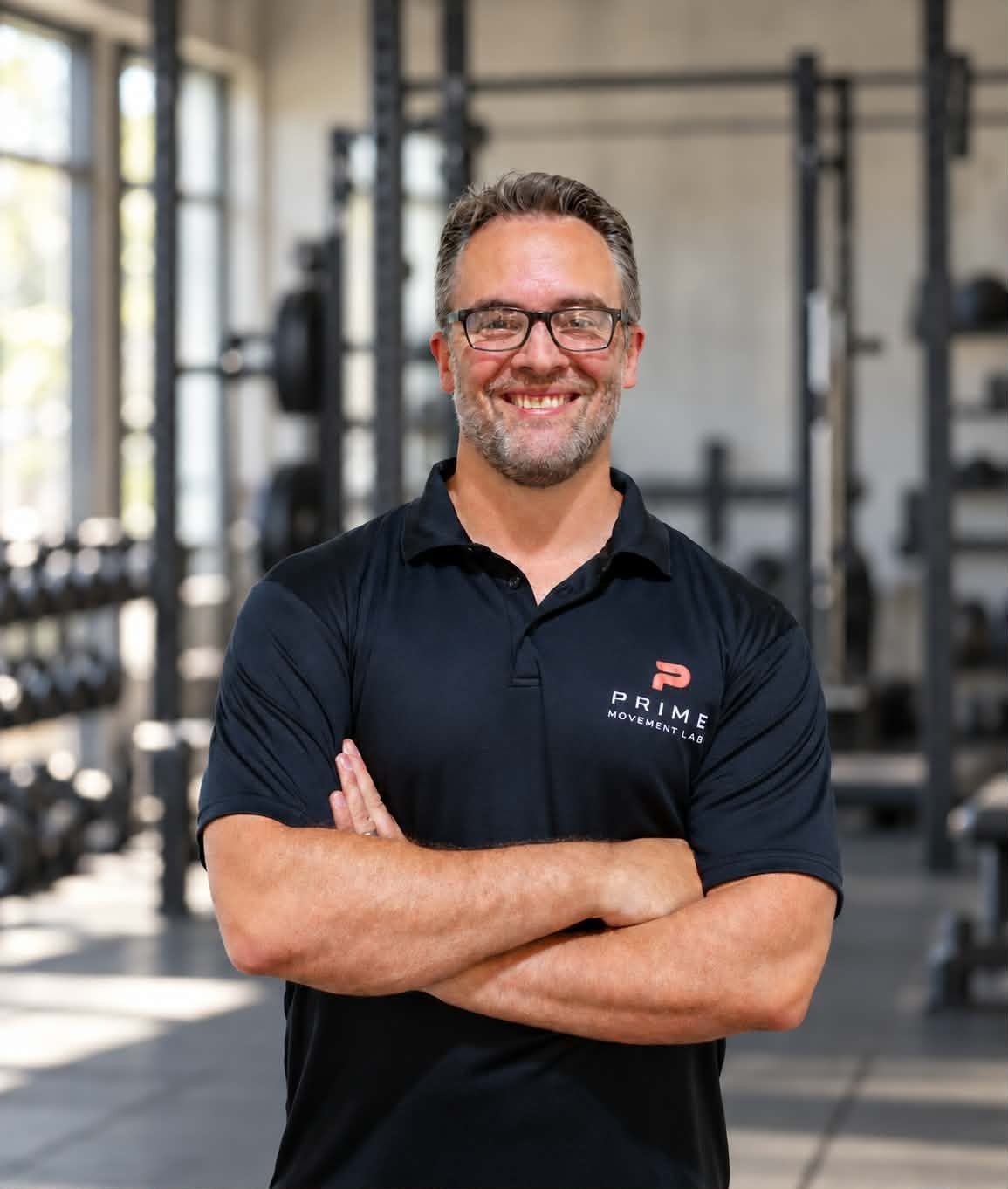
Hi, I'm Mathew.
I help adults rebuild the strength, movement and capability they've lost — so they can get back to the things that make life worth having a body for.
It started with my own body.
I've been training in gyms since I was 16 and spent much of my younger life playing sport — rugby league, rugby union, touch football, cricket, swimming and surf lifesaving.
Being physically active was always part of who I was.
But over the years, I accumulated injuries. Significant ankle sprains became ongoing problems. Persistent plantar fasciitis eventually led to me tearing the plantar fascia in my left foot twice within six months.
At the time, I didn't have the guidance or understanding I needed to properly address why these problems kept occurring.
Then came the injury that changed the direction of my life.
While batting in a game of cricket, I suffered what my surgeon described as a catastrophic knee injury — dislocating my knee and damaging multiple ligaments and structures. It required two major surgeries and a long rehabilitation.
It was difficult to reconcile.
I'd trained for most of my life. I'd always considered myself fit and capable. So how had I reached a point where my body had become this vulnerable?
That question sent me down a very different path.
I became determined to understand why injuries happen, what could be done to reduce their likelihood, and how training could be used not simply to improve performance, but to build a more resilient and capable body.
Combined with a growing dissatisfaction with the corporate career I'd spent more than a decade in, it eventually led me to change direction completely.
Learning to think, not just follow.
When I first entered the fitness industry, I threw myself into learning.
Like a lot of new coaches, I initially gravitated towards whoever seemed to be popular at the time. Over the years, though, I became much more selective about who I learned from and, more importantly, how I evaluated what I was being taught.
I sought out experienced coaches who had demonstrated their methods in the real world, often over decades and across very different people and environments.
That exposure gave me different tools and different ways of looking at the body. But probably the most important thing it taught me was how to think.
I developed a framework for physical preparation and problem-solving that allowed me to ask better questions: What does this person actually need? What's limiting them? What might we have overlooked? Is what we're doing producing the response we expected? And if it isn't, what needs to change?
Over time, I also became increasingly comfortable questioning accepted wisdom.
I've seen approaches become popular because they're fashionable or well marketed rather than because they consistently produce better outcomes. I've also seen methods fall out of favour despite continuing to produce excellent results when applied appropriately.
That taught me something I've carried into Prime: Learn from good evidence. Learn from experienced people. But also pay attention to the person standing in front of you.
Assess. Apply. Observe. Measure. Adjust.
Adding the clinical and scientific foundation.
As my coaching experience grew, I became aware of another gap in my development.
Much of what I'd learned came from practical experience — working with clients, learning from experienced coaches and seeing what produced results in the real world.
I wanted to understand the other side of that equation.
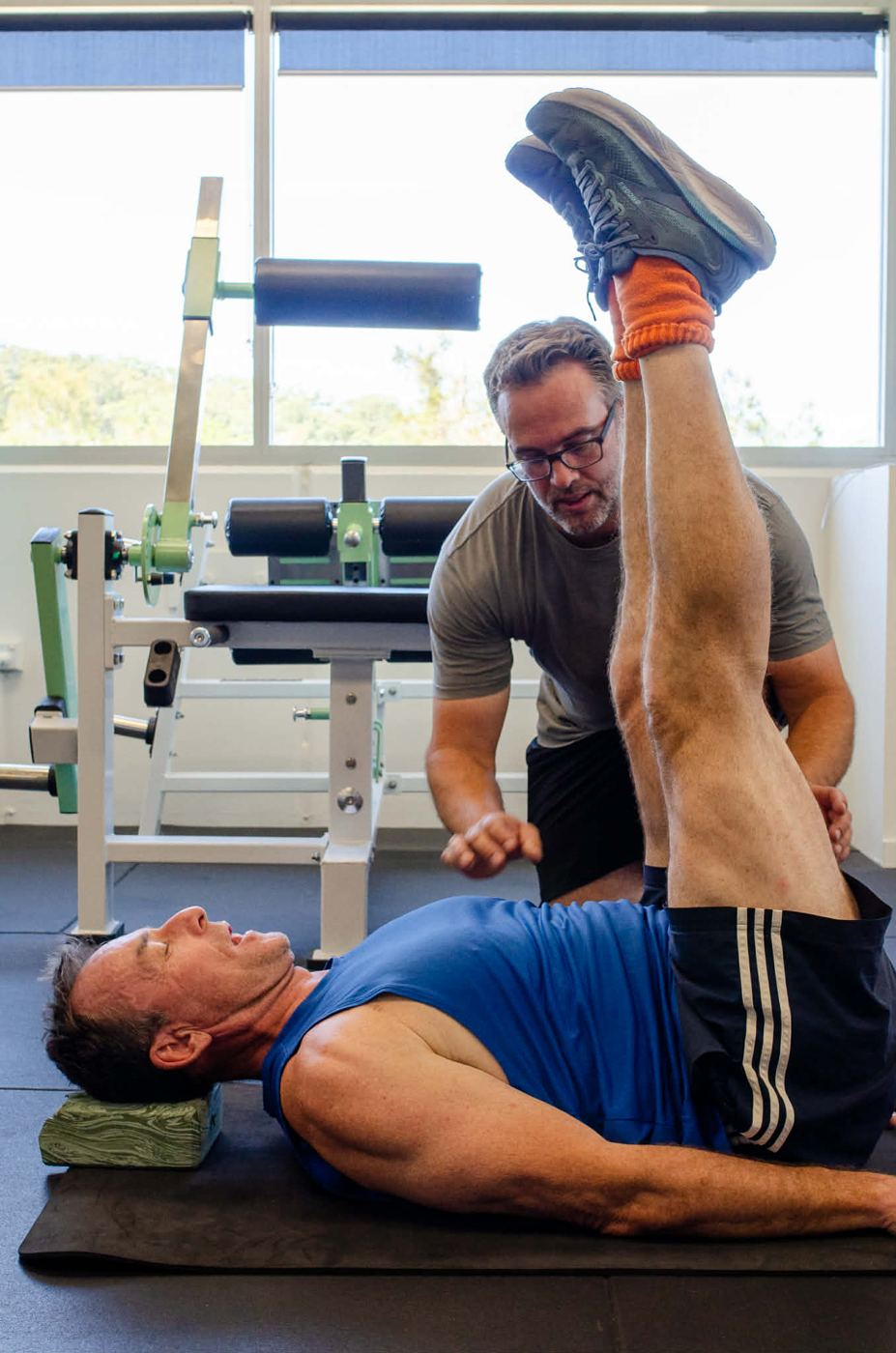
So I returned to university to study Clinical Exercise Physiology, developing a stronger foundation in anatomy, physiology, biomechanics, exercise science and the management of chronic health conditions.
It also gave me the professional qualification and scope to work as an Accredited Exercise Physiologist.
Importantly, university didn't replace what I'd learned through coaching. It added another lens.
The scientific and clinical evidence helped me question and refine ideas I'd developed in the field. At the same time, my coaching experience helped me interpret that knowledge through the realities of working with actual people — where things are rarely as neat as they appear on paper.
That combination became central to Prime Movement Lab.
Evidence informs the process. Experience informs the process. The individual response informs the process.
When those things don't perfectly agree, that's where good thinking becomes important.
The people who shaped my approach.
Ian King & KSI
Ian's work in physical preparation has probably had the greatest influence on my overall training philosophy. His more than four decades working at the highest levels of sport, across a wide range of disciplines, provided me with both technical models and a problem-solving framework that continues to shape how I approach training today. I'm currently completing KSI Level 3.
Mark Buckley & FMA
Mark's work gave me another way of looking at strength training, movement and joint mobilisation. Just as importantly, his approach exposed me to the psychological side of coaching — including how beliefs, behaviour and a person's internal experience can influence the process of change. I'm FMA Level 2 certified.
Paul Meldrum & Ascend
Paul has been another major influence on my development, particularly in practical training, rehabilitation and working through more complex client problems. His mentorship has helped bridge gaps between theory and what actually happens when you're standing in front of a real person trying to solve a real problem.
Different perspectives. Different tools.
I haven't tried to copy any one system wholesale. I've taken what has made sense, tested it against my own experience and continued refining the way I work.
Why I built Prime Movement Lab.
Prime is the result of that journey.
I wanted to create something that brought together the parts of health and physical preparation that I believe matter most:
Clinical thinking. Physical preparation. Real coaching.
A place where we could take the time to understand the person rather than simply the condition.
Where exercise could be progressed rather than merely prescribed.
Where strength, mobility, power and endurance could be developed together.
Where we could measure what's happening, learn from the response and change course when needed.
And where clients could understand the process themselves rather than remaining dependent on someone else indefinitely.
I'm still learning. I expect I always will be.
But that's part of what Prime Movement Lab represents to me.
Stay curious. Test what you think you know. Pay attention to the individual. And keep looking for better ways to build a capable body.
Qualifications & Professional Development
- Bachelor of Clinical Exercise Physiology Griffith University
- Accredited Exercise Physiologist (AEP) ESSA
- Certificate III & IV in Fitness
- KSI Level 3 Currently completing
- FMA Level 2
- Meldrum Performance / Ascend Mentorship & PD
- Current First Aid & CPR
Want to know whether I can help?
Start with an Initial Assessment. We'll talk through what's going on, establish where you are now and work out the most appropriate next step.